STEM Sprint™

Benefits of STEM Sprint™ Education

What is STEM?

STEM Sprint™ Methodology
STEM Sprint™
We blend Agile, Google Design Sprint, and Circular Economy into result-driven pilots that build critical, creative, and strategic thinking.
Just kids solving real problems and building real solutions.
Teacher training | Parent workshops | School certification.
Zero cost to schools
Just kids solving real problems and building real solutions.
Teacher training | Parent workshops | School certification.
Zero cost to schools
STEM Sprint™: A Breakthrough in Accelerated Learning
In 2025, we pioneered the STEM Sprint™ methodology, Positech, a dynamic, project-based framework
We believe in a future where AI and technology serve as collaborative tools, amplifying human potential, not replacing it. This is Positech: human ingenuity, amplified by technology.
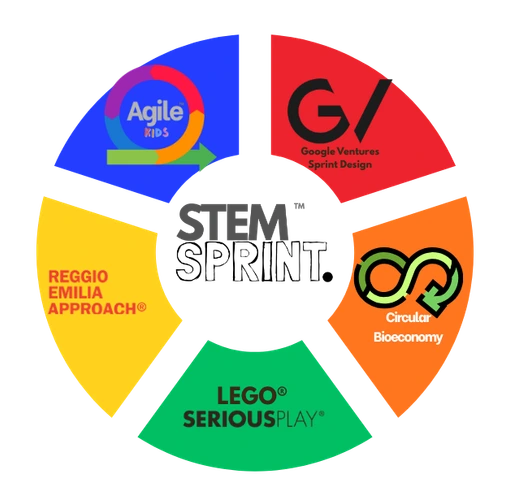
In 2025, we created the STEM Sprint™ methodology as the educational embodiment of this philosophy, a revolutionary, project-based program for K–K12 that is fully adaptable to every school in the world, regardless of resources, language, or cultural context. What makes STEM Sprint™ truly innovative is its unique integration of five powerful frameworks: Software Development Agile methodology for iterative project management, Google Sprint Design methodology for rapid problem-solving under time constraints, Lego Serious Play methodology for hands-on metaphorical thinking and storytelling, Circular Economy for Kids for teaching sustainability through nature's regenerative cycles, and the Reggio Emilia Approach for nurturing creativity, self-expression, and collaborative exploration in younger learners. This fusion transforms traditional STEM education into an dynamic sprint experience where children learn by building, testing, reflecting, and refining real-world solutions—with technology as an enabler, not the protagonist.
In 2025, we created the STEM Sprint™ methodology as the educational embodiment of this philosophy, a revolutionary, project-based program for K–K12 that is fully adaptable to every school in the world, regardless of resources, language, or cultural context. What makes STEM Sprint™ truly innovative is its unique integration of five powerful frameworks: Software Development Agile methodology for iterative project management, Google Sprint Design methodology for rapid problem-solving under time constraints, Lego Serious Play methodology for hands-on metaphorical thinking and storytelling, Circular Economy for Kids for teaching sustainability through nature's regenerative cycles, and the Reggio Emilia Approach for nurturing creativity, self-expression, and collaborative exploration in younger learners. This fusion transforms traditional STEM education into an dynamic sprint experience where children learn by building, testing, reflecting, and refining real-world solutions—with technology as an enabler, not the protagonist.
By 2026, STEM Sprint™ had proven its global adaptability across diverse educational contexts, from under-resourced rural schools to advanced urban centers, from multicultural classrooms to monolingual communities. The methodology's modular design allows any teacher, regardless of technical background or access to cutting-edge tools, to implement sprints tailored to their local curriculum, culture, available materials, and age group. This flexibility ensures that STEM Sprint™ is not a rigid prescription but a living, breathing framework that evolves with each classroom, making quality, Positech-aligned STEM education truly accessible worldwide. Technology does not replace the teacher or the child; it amplifies their creativity, curiosity, and capacity to collaborate.
Values & Benefits of STEM Sprint™ Education
STEM Sprint™ is not just a teaching method; it is a comprehensive cognitive development system that equips K–K12 learners with the full spectrum of thinking skills required for the 21st century.
Through the integration of Agile software development, Google Sprint Design, Lego Serious Play, Bio-Circular Economy principles, and the Reggio Emilia approach, students develop:
-Critical Thinking: evaluating evidence and arguments
-Creative Thinking: generating novel ideas and solutions
-Analytical Thinking: breaking down complex problems into manageable components
-Logical Thinking: constructing coherent cause-effect sequences
-Strategic Thinking: planning multiple steps ahead
-Reflective thinking: learning from mistakes and iterating
-Abstract Thinking: grasping concepts beyond the physical and immediate
-Lateral thinking: solving problems through indirect and creative approaches
Together, these eight cognitive pillars transform students into agile, resilient, and inventive problem-solvers.
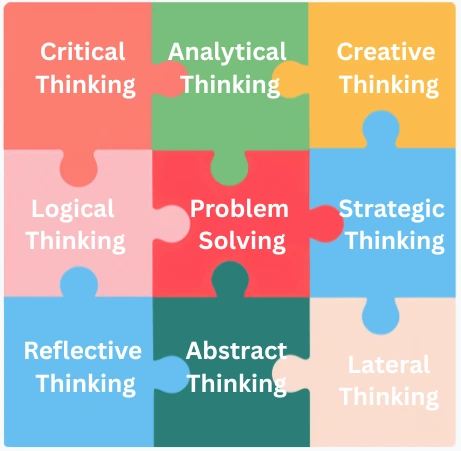
-Critical Thinking: evaluating evidence and arguments
-Creative Thinking: generating novel ideas and solutions
-Analytical Thinking: breaking down complex problems into manageable components
-Logical Thinking: constructing coherent cause-effect sequences
-Strategic Thinking: planning multiple steps ahead
-Reflective thinking: learning from mistakes and iterating
-Abstract Thinking: grasping concepts beyond the physical and immediate
-Lateral thinking: solving problems through indirect and creative approaches
Together, these eight cognitive pillars transform students into agile, resilient, and inventive problem-solvers.
Central to the Positech philosophy, STEM Sprint™ teaches that AI and technology are tools that amplify human potential, not replace it.
Students learn to collaborate with emerging technologies as partners—using AI for data analysis, rapid prototyping, and personalized feedback—while retaining full ownership of the creative and ethical dimensions of their projects. This human-centered approach ensures that technology serves the learner, not the other way around. Additionally, the methodology emphasizes hands-on learning through the reuse of local products and materials, integrating the Bio-Circular Economy for Kids to teach sustainability, resourcefulness, and environmental stewardship. Children learn to see waste as a resource, transforming discarded cardboard, plastic containers, and natural found objects into prototypes, models, and working solutions—connecting STEM to real-world ecological challenges in their own communities.
Students learn to collaborate with emerging technologies as partners—using AI for data analysis, rapid prototyping, and personalized feedback—while retaining full ownership of the creative and ethical dimensions of their projects. This human-centered approach ensures that technology serves the learner, not the other way around. Additionally, the methodology emphasizes hands-on learning through the reuse of local products and materials, integrating the Bio-Circular Economy for Kids to teach sustainability, resourcefulness, and environmental stewardship. Children learn to see waste as a resource, transforming discarded cardboard, plastic containers, and natural found objects into prototypes, models, and working solutions—connecting STEM to real-world ecological challenges in their own communities.
What is STEM?
STEM is an umbrella term used to group together the related technical disciplines of science, technology, engineering, and mathematics.
In the early 1990s the acronym STEM was used by a variety of educators. Beverly P. Schwartz developed a STEM mentoring program in the Capital District of New York State, and was using the acronym as early as November, 1991.

Global STEM at a Glance (2025-2026)
Global K-12 STEM Market Value (2024): USD $78 Billion, projected to reach $130 Billion by 2031 (CAGR 7.90%).
- Asia: Aggressive state-led expansion (China, South Korea, Singapore); focus on hyper-specialization and "Physical AI".
- Americas: Strong innovation-driven market (US leads); policy focus on maintaining global competitiveness.
- Europe: Critical stagnation in tertiary enrollment (26.9% of university students); severe teacher digital skills gap.
- Africa: Structural bottleneck; massive teacher shortage for STEM pathways

Run a STEM Sprint™ at your school!
Turns your K–12 classroom into a project-based powerhouse using Agile, Google Design Sprint, and Lego Serious Play. Your students won't just study the future—they'll build it.
No barriers. No borders. No excuses. This methodology is affordable, and designed for every culture and context. If you have a classroom, you can run a Sprint.
Certified by